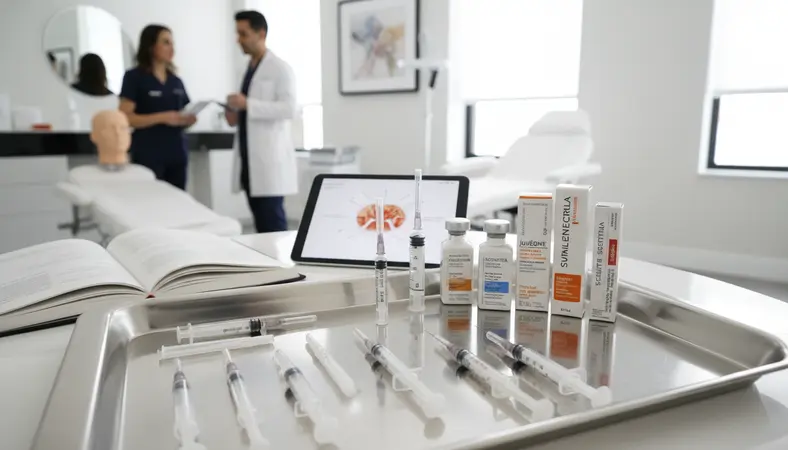
The decision between a surgical facelift and non-surgical alternatives is one of the most important choices in facial rejuvenation. Advances in injectable technology, PDO threads, and energy-based devices have dramatically expanded what can be achieved without surgery, making the non-surgical facelift a legitimate option for many patients who would have previously been told that only surgery could help them.
This guide provides an honest, evidence-based comparison of both approaches. We examine recovery time, cost, results quality, longevity, risks, and patient selection criteria to help practitioners counsel their patients effectively and help patients make informed decisions about their treatment path.
The Surgical Facelift: What It Involves
A surgical facelift (rhytidectomy) is a procedure performed by a plastic surgeon under general anesthesia or deep sedation. The surgeon makes incisions typically starting at the temples, continuing around the ear, and extending into the hairline. Through these incisions, the surgeon lifts and repositions the deeper facial tissues (the SMAS layer), removes excess skin, and redrapes the remaining skin for a tighter, more youthful contour.
Modern facelift techniques, including the deep plane facelift and the SMAS plication lift, focus on repositioning deeper tissue rather than simply pulling skin tight. This produces more natural results and greater longevity than older skin-only techniques. A well-performed surgical facelift can take 10 to 15 years off a patient's appearance and the results typically last 7 to 10 years.
The trade-off is significant downtime, cost, and surgical risk. Recovery requires 2 to 4 weeks away from work, with full healing taking 3 to 6 months. Costs range from $12,000 to $30,000 or more depending on surgeon, location, and extent of the procedure. Surgical risks include hematoma, nerve damage, infection, scarring, and anesthesia complications.
The Non-Surgical Facelift: Your Options
A "non-surgical facelift" is not a single procedure but rather a customized combination of minimally invasive treatments that collectively produce facial rejuvenation without surgery. The specific treatments selected depend on the patient's anatomy, concerns, and goals. The main components include:
Dermal Fillers
Hyaluronic acid fillers (Juvederm, Restylane) and biostimulators (Sculptra, Radiesse) restore lost volume in the cheeks, temples, jawline, and under-eyes. Strategic filler placement in the midface creates a lifting effect that improves the entire lower face. Fillers are the foundation of most non-surgical facelift protocols, accounting for the majority of the visible improvement.
Botox and Neurotoxins
Botox relaxes overactive muscles that pull the face downward and create wrinkles. In a non-surgical facelift context, Botox is used in the forehead, glabella, crow's feet, and platysmal bands. A Nefertiti lift using Botox along the jawline and neck relaxes the platysma muscle to create a subtle lifting effect.
PDO Thread Lifts
Barbed PDO threads physically lift sagging tissue in the midface, jowls, and neck, providing the closest approximation to surgical lifting available without surgery. Smooth threads placed in a mesh pattern stimulate collagen for skin tightening. Threads address the laxity component that fillers alone cannot fully correct.
Energy-Based Devices
Radiofrequency (Morpheus8, Thermage), ultrasound (Ultherapy), and laser treatments can tighten skin by stimulating deep collagen remodeling. These are often used as adjuncts to injectables and threads, particularly for improving skin quality, texture, and mild laxity in the lower face and neck.
Complete Comparison Table
| Factor | Surgical Facelift | Non-Surgical Facelift |
|---|---|---|
| Procedure Time | 3-6 hours | 45-90 minutes |
| Anesthesia | General or deep sedation | Topical / local numbing |
| Recovery Time | 2-4 weeks off work | 1-7 days (treatment dependent) |
| Full Healing | 3-6 months | 2-4 weeks |
| Results Longevity | 7-10 years | 6-24 months (maintenance needed) |
| Cost | $12,000-$30,000+ | $3,000-$8,000 per session |
| Degree of Lifting | Significant (SMAS level) | Mild to moderate |
| Skin Removal | Yes (excess skin excised) | No |
| Scarring | Yes (hidden in hairline/ear) | None or needle marks only |
| Reversible | No | Partially (HA fillers with hyaluronidase) |
| Major Complications | Hematoma, nerve damage, scarring | Vascular occlusion, infection (rare) |
| Ideal Age Range | 50s-70s (significant laxity) | 30s-50s (early-moderate aging) |
Non-Surgical Options in Detail
A well-designed non-surgical facelift protocol addresses three dimensions of facial aging: volume loss, tissue descent, and skin quality deterioration. No single treatment addresses all three, which is why combination protocols produce the best results.
Volume restoration is the cornerstone. As we age, we lose bone density in the skull, facial fat pads shrink and descend, and the skin thins. This creates a deflated, hollow appearance. Strategic filler placement in the temples, cheeks, jawline, and chin rebuilds the facial scaffolding. High G-prime fillers like Juvederm Voluma provide structural support, while softer fillers smooth transition zones. Biostimulators like Sculptra offer gradual, widespread collagen building that improves the overall facial foundation.
Tissue repositioning through PDO thread lifts addresses the sagging that fillers alone cannot fix. Barbed threads placed from the midface to the temporal area physically lift jowls and nasolabial folds. Thread lifts bridge the gap between fillers and surgery by providing a true lifting vector. For patients with early jowling, a PDO thread lift can delay surgery by 5 to 10 years.
Muscle modulation with Botox completes the picture. Relaxing the depressor muscles of the lower face (DAO, mentalis, platysma) creates subtle lifting. The Nefertiti lift uses Botox along the jawline and neck to relax the downward-pulling platysma, sharpening the jaw-neck angle. Upper face Botox smooths forehead lines and opens the eyes by elevating the brow.
Patient Selection: Who Benefits from Each Approach
Good Non-Surgical Candidates
- Ages 30-55 with early to moderate aging
- Mild to moderate volume loss
- Early jowling or nasolabial fold deepening
- Good skin elasticity
- Cannot afford extended recovery time
- Want gradual, natural-looking improvement
- Prefer reversible or low-risk options
Better Surgical Candidates
- Ages 50+ with significant skin excess
- Advanced jowling and neck banding
- Significant SMAS layer descent
- Poor skin elasticity
- Want long-lasting, one-time results
- Can commit to 2-4 weeks recovery
- Non-surgical treatments no longer adequate
Risks and Safety Considerations
Both approaches carry risks, but the severity and frequency differ significantly. Surgical facelift complications, while uncommon with experienced surgeons, can include hematoma (1-3% incidence), facial nerve injury (temporary in about 1-2%, permanent in less than 1%), infection, prolonged numbness, skin loss, and scarring. General anesthesia carries its own separate risk profile including cardiovascular events and allergic reactions.
Non-surgical facelift risks are generally milder and more transient. The most common side effects across all injectable treatments are bruising, swelling, and temporary tenderness. The most serious filler complication is vascular occlusion, which occurs when filler inadvertently enters or compresses a blood vessel. This can lead to tissue necrosis and, in extremely rare cases, vision impairment. The incidence of clinically significant vascular occlusion is estimated at less than 0.1% when performed by trained practitioners.
Thread lift complications include thread migration, dimpling, asymmetry, infection, and thread visibility or palpability. These occur more frequently than filler complications but are typically self-resolving or easily managed. Proper training in thread placement technique and patient selection is the single most important factor in minimizing thread complications.
The critical safety difference is that HA fillers can be dissolved with hyaluronidase in an emergency, providing a reversal option that surgery does not have. This reversibility is a significant advantage of the non-surgical approach, particularly for patients who are new to aesthetic treatments. Our Cadaver Lab training provides essential anatomical education for understanding and preventing injection complications.
The Hybrid Approach: Surgery Plus Injectables
An increasingly common approach among sophisticated patients and practitioners is combining surgery with non-surgical maintenance. Many post-facelift patients begin Botox and filler treatments 3 to 6 months after surgery to optimize and extend their surgical results. Botox prevents the dynamic wrinkles that surgery does not address, while strategic filler placement maintains volume as aging continues after surgery.
This hybrid approach recognizes that surgery and injectables are not competitors but complementary tools. Surgery provides the structural foundation by removing excess skin and repositioning deep tissue, while injectables provide the finishing touches and ongoing maintenance. Patients who adopt this approach often maintain a consistently youthful appearance that evolves naturally rather than showing a sudden dramatic change followed by gradual deterioration.