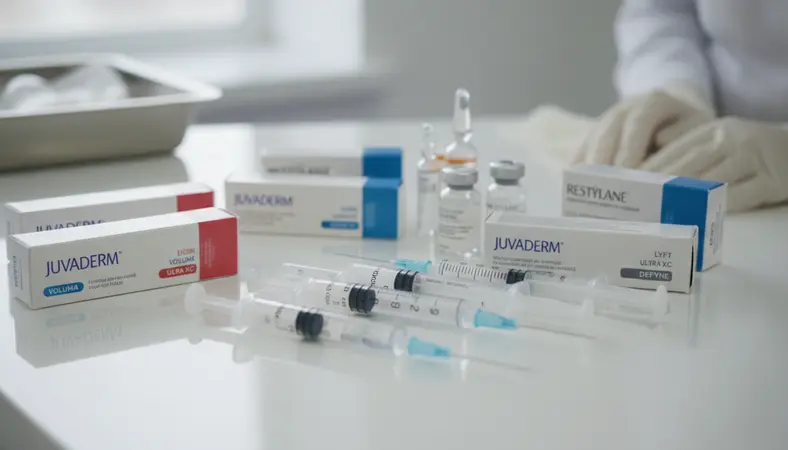
Botox and dermal fillers are the two pillars of non-surgical facial rejuvenation, yet patients and even some practitioners still confuse what each one does. They work through fundamentally different mechanisms, address completely different concerns, and are often most effective when used together. Understanding when to choose Botox, when to choose fillers, and when to combine both is essential knowledge for every aesthetic practitioner and informed patient.
This guide breaks down the science behind each treatment, provides a clear treatment-area comparison, and outlines the combination strategies that produce the most natural, comprehensive results.
How Botox and Fillers Work Differently
Botox (and all neurotoxins) works by blocking nerve signals to muscles. When injected into a specific facial muscle, botulinum toxin type A prevents the release of acetylcholine at the neuromuscular junction, temporarily paralyzing or weakening the muscle. This reduces the appearance of wrinkles caused by repetitive muscle movement, known as dynamic wrinkles. Think forehead lines when you raise your eyebrows, frown lines when you concentrate, and crow's feet when you smile.
Dermal fillers work by physically adding volume beneath the skin's surface. Most fillers are made from hyaluronic acid, a naturally occurring molecule that attracts water and plumps tissue. Fillers address static wrinkles (lines visible even at rest), hollow areas, and volume loss. They can restore cheek fullness, smooth nasolabial folds, enhance lips, fill tear troughs, and define the jawline. Some fillers, like Sculptra and Radiesse, also stimulate collagen production for longer-lasting structural improvement.
The Key Distinction
Relaxes muscles to reduce wrinkles caused by movement (dynamic wrinkles)
Adds volume to restore fullness, smooth folds, and enhance contours (static wrinkles and volume loss)
Treatment Area Comparison
Understanding which product is appropriate for each facial zone is fundamental to good outcomes. The table below provides a practical reference for treatment area selection.
| Treatment Area | Botox | Filler | Notes |
|---|---|---|---|
| Forehead lines | Primary | Rare | Botox relaxes frontalis; filler only for deep etched lines at rest |
| Frown lines (glabella) | Primary | Adjunct | Botox first; filler for residual static lines |
| Crow's feet | Primary | Rare | Botox is the standard; filler not commonly used here |
| Under-eye hollows | No | Primary | HA fillers or PRP for tear trough correction |
| Cheeks / midface | No | Primary | Voluma, Restylane Lyft, or Sculptra for volume |
| Nasolabial folds | No | Primary | Vollure, Restylane Defyne; cheek filler can also help |
| Lips | Lip flip | Primary | Filler for volume; Botox lip flip for subtle eversion |
| Marionette lines | Adjunct | Primary | Filler to fill; Botox to DAO muscle as adjunct |
| Jawline | Slimming | Definition | Botox slims masseter; filler defines jawline contour |
| Chin | Dimpling | Projection | Botox for pebble chin; filler for chin projection |
| Nose | Tip drop | Reshaping | Filler for non-surgical rhinoplasty; Botox for tip ptosis |
| Neck bands | Primary | Rare | Botox relaxes platysmal bands |
When Botox Is the Right Choice
Botox is the clear choice when the primary concern involves lines and wrinkles caused by muscle movement. These dynamic wrinkles are most prominent in the upper face: the horizontal forehead lines from the frontalis muscle, the vertical "11" lines between the brows from the corrugator and procerus muscles, and the crow's feet from the orbicularis oculi.
Beyond the upper face, Botox has several specialized applications where it excels over fillers. Masseter Botox slims a wide jaw and treats TMJ-related bruxism. Platysmal band treatment smooths prominent neck cords. The Botox lip flip uses a small dose in the orbicularis oris to gently evert the upper lip border without adding volume. Botox into the depressor anguli oris (DAO) can subtly lift the corners of the mouth.
Botox also serves important therapeutic functions including treating chronic migraine, hyperhidrosis, and TMJ disorders, making it a versatile tool that extends well beyond cosmetic wrinkle reduction.
When Dermal Fillers Are the Right Choice
Fillers are the correct treatment when the concern involves volume loss, hollowness, deep folds, or inadequate facial structure. As we age, we lose bone, fat pads shrink and descend, and skin thins, creating a deflated appearance that no amount of muscle relaxation can fix. This is where fillers provide transformative results.
The midface is the most impactful area for filler treatment. Restoring cheek volume with a product like Juvederm Voluma or Restylane Lyft creates a lifting effect that improves the entire lower face, softening nasolabial folds and even reducing the appearance of jowls. This "liquid lift" approach treats the cause (volume loss) rather than chasing individual wrinkles.
Lips are another area where fillers are irreplaceable. Whether patients want subtle enhancement or more dramatic augmentation, hyaluronic acid lip fillers like Juvederm Volbella or Restylane Kysse provide natural-looking volume and definition. The Lip Filler Certification Course teaches the multiple techniques needed for different lip anatomy types.
Fillers also excel in jawline contouring, chin augmentation, non-surgical rhinoplasty, temple hollowing, and hand rejuvenation. Biostimulators like Sculptra offer a different approach by gradually building collagen over months, ideal for patients who want subtle, progressive improvement.
The Power of Combination Treatment
The most effective facial rejuvenation almost always involves combining Botox with fillers. This approach, sometimes called a "liquid facelift," addresses both the dynamic and static components of facial aging simultaneously. Experienced injectors think of the face as an integrated system rather than treating individual lines in isolation.
A typical full-face combination treatment might include Botox to the forehead, glabella, and crow's feet to reduce dynamic wrinkles; filler to the cheeks for volume restoration and midface lift; filler to the nasolabial folds and marionette lines for crease softening; and possibly lip enhancement or jawline definition. This comprehensive approach produces results that look natural because all areas are balanced and harmonized.
There is also a functional synergy between the two treatments. Botox reduces the muscle forces that break down filler over time. For example, treating the orbicularis oris with Botox can extend the longevity of lip filler by reducing the constant muscle contractions that accelerate filler metabolism. Similarly, treating the glabellar complex with Botox helps maintain filler placed in deep static frown lines.
Our Total Facial Injection Course teaches this integrative approach, covering treatment planning, product selection, layering techniques, and managing patient expectations for combination treatments.
Longevity and Cost Comparison
Fillers generally outlast Botox on a per-treatment basis. Botox lasts approximately 3 to 4 months, requiring 3 to 4 treatments per year for maintenance. Hyaluronic acid fillers typically last 6 to 18 months depending on the product and placement area, with lip fillers on the shorter end (6 to 9 months) and cheek fillers lasting up to 18 to 24 months. Biostimulators like Sculptra can produce results lasting 2 or more years.
From a cost perspective, Botox treatments range from $200 to $600 per session depending on the number of areas treated. Filler treatments typically range from $600 to $1,200 per syringe, with most patients needing 1 to 4 syringes depending on treatment goals. On an annual basis, maintaining both Botox and fillers may cost $2,000 to $5,000, which represents significant value compared to surgical alternatives.