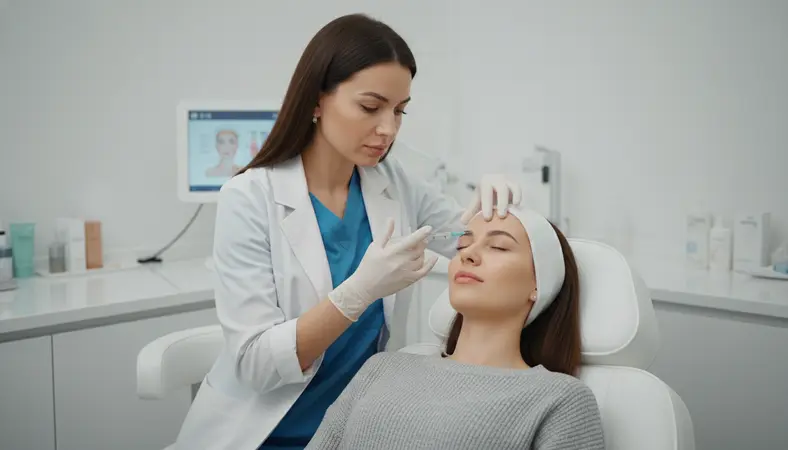
Botulinum toxin type A, more commonly known by its brand name Botox, remains the single most popular minimally invasive cosmetic procedure performed worldwide. According to the American Society of Plastic Surgeons, more than 9 million botulinum toxin treatments are administered annually in the United States alone. For practitioners entering the field of aesthetic medicine, mastering Botox injections is often the critical first step toward building a successful injectable practice.
Whether you are a nurse practitioner, physician assistant, dentist, or physician looking to add aesthetic services to your practice, understanding the foundational principles of Botox injection is non-negotiable. This guide covers the five essential things every beginner must know before picking up a syringe.
1. Facial Anatomy Is Your Most Important Foundation
Before you ever inject a single unit of Botox, you need a comprehensive understanding of facial anatomy. This goes far beyond memorizing muscle names from a textbook. You need to understand the layered architecture of the face, including the depth and orientation of muscles, the location of motor nerves, and the vascular supply that runs through each treatment zone.
The upper face is the most common starting point for new injectors, and for good reason. The muscles of the forehead, glabella, and periorbital region are relatively predictable in their anatomy. The frontalis muscle, responsible for horizontal forehead lines, runs vertically from the brow to the hairline. The corrugator supercilii and procerus muscles create the vertical "11" lines between the brows. The orbicularis oculi, a sphincter muscle surrounding the eye, produces crow's feet when it contracts.
However, even in these "beginner-friendly" zones, anatomical variation between patients is significant. Some patients have a narrow frontalis that only covers the central forehead, while others have broad muscle bellies extending laterally. Injecting too laterally in a patient with a narrow frontalis can leave untreated lateral forehead lines, while injecting too low can cause brow ptosis by weakening the muscle that elevates the brow.
We strongly recommend investing in cadaver lab training early in your education. Working with cadaveric specimens provides an irreplaceable understanding of the three-dimensional relationships between facial structures that no diagram or video can replicate.
2. Dosing Is Both a Science and an Art
Botox dosing is measured in units, and the appropriate dose varies based on the treatment area, muscle mass, patient gender, and desired outcome. General starting guidelines exist, but they are exactly that: starting points. A typical female patient might receive 10 to 20 units in the forehead, 15 to 25 units in the glabella, and 8 to 16 units for crow's feet. Male patients typically require 1.5 to 2 times these doses due to greater muscle mass.
One of the most common beginner mistakes is overdosing the forehead while underdosing the glabella. The frontalis is the only muscle that elevates the brow. If you weaken it too aggressively without adequately treating the depressor muscles (the corrugator and procerus in the glabella), the patient may experience a heavy or droopy brow. This creates an unhappy patient and undermines confidence in your skills.
The golden rule for beginners is to start conservative. You can always add more Botox at a two-week follow-up, but you cannot take it away once injected. Under-treatment is easily corrected; over-treatment requires waiting three to four months for the effect to wear off. Building a reputation for natural-looking results will serve your practice far better than aggressive dosing that occasionally produces a "frozen" look.
3. The Consultation Sets the Stage for Success
A thorough patient consultation is arguably more important than the injection itself. This is where you establish expectations, identify contraindications, and build the trust that turns a first-time patient into a long-term client. Never rush this step, even when your schedule is tight.
Begin by asking the patient what bothers them about their appearance. Let them look in a mirror and point to their areas of concern. Many beginners make the mistake of telling the patient what they need rather than listening to what the patient wants. A patient who came in concerned about their crow's feet may not want their forehead treated at all, and suggesting additional areas too aggressively can feel like an upsell rather than a recommendation.
Screen for contraindications including pregnancy, breastfeeding, neuromuscular disorders such as myasthenia gravis or Lambert-Eaton syndrome, allergy to botulinum toxin or albumin, and active infection at the injection site. Document all medications, particularly blood thinners and supplements like fish oil, vitamin E, and ginkgo biloba that increase bruising risk.
Importantly, discuss realistic outcomes. Botox takes 3 to 7 days to begin working, with full effect typically seen at 14 days. Results last approximately 3 to 4 months for most patients. First-time patients sometimes expect immediate and permanent results, so managing these expectations upfront prevents dissatisfaction later.
4. Safety Protocols Are Non-Negotiable
Botox injections are among the safest cosmetic procedures when performed correctly, but they still carry risks that require strict adherence to safety protocols. Every injection room should be stocked with emergency supplies including epinephrine, diphenhydramine, and basic resuscitation equipment. While anaphylaxis from Botox is exceedingly rare, being unprepared for it is inexcusable.
Proper reconstitution of Botox is a fundamental safety concern. OnabotulinumtoxinA (Botox Cosmetic) comes as a vacuum-dried powder that must be reconstituted with preservative-free 0.9% sodium chloride. The standard dilution for cosmetic use is 2.5 mL of saline per 100-unit vial, yielding 4 units per 0.1 mL. Always inject the saline gently along the inside wall of the vial rather than forcing it directly into the powder, as excessive agitation can denature the protein.
Injection technique safety includes using appropriate needle sizes (typically 30- to 32-gauge), aspirating before injecting in vascular areas, and maintaining strict aseptic technique. Clean the injection site with alcohol or chlorhexidine and allow it to dry completely before injection. Never reuse needles between patients, and dispose of sharps properly in compliance with OSHA regulations.
Documentation is also a safety protocol. Photograph every patient before treatment, record the exact units injected at each site, note the lot number and expiration date of the product, and document the patient's informed consent. This protects both the patient and your practice.
5. Building Clinical Confidence Takes Structured Training
Reading articles, watching videos, and studying anatomy textbooks are all valuable, but they cannot replace the experience of injecting under expert supervision. The transition from theoretical knowledge to clinical confidence happens in the treatment room, not behind a screen.
A structured Botox certification training program provides the scaffolded learning experience that beginners need. This typically includes didactic instruction on pharmacology and anatomy, hands-on practice with injection techniques, live patient treatment under supervision, and competency assessment before independent practice.
When choosing a training program, look for courses that offer a low student-to-instructor ratio, live patient models rather than just mannequins or cadavers, and faculty who are actively practicing injectors. The best programs also cover the business side of aesthetics, including patient marketing, pricing strategies, and building a referral network.
After your initial certification, commit to ongoing education. Attend advanced courses, observe experienced injectors, and stay current with the latest techniques and products. The aesthetic medicine field evolves rapidly, and the practitioners who thrive are those who never stop learning.
Taking Your First Step
Beginning your journey in Botox injection is both exciting and demanding. The five fundamentals outlined here, mastering anatomy, understanding dosing principles, conducting thorough consultations, adhering to safety protocols, and seeking structured training, form the foundation upon which a successful injectable career is built.
At Facial Injectables, our Botox Certification Course is designed specifically for practitioners at the beginning of their injectable journey. With live patient training, expert faculty, and a curriculum that covers everything from anatomy review to practice building, it provides the comprehensive foundation you need to inject with confidence from day one.