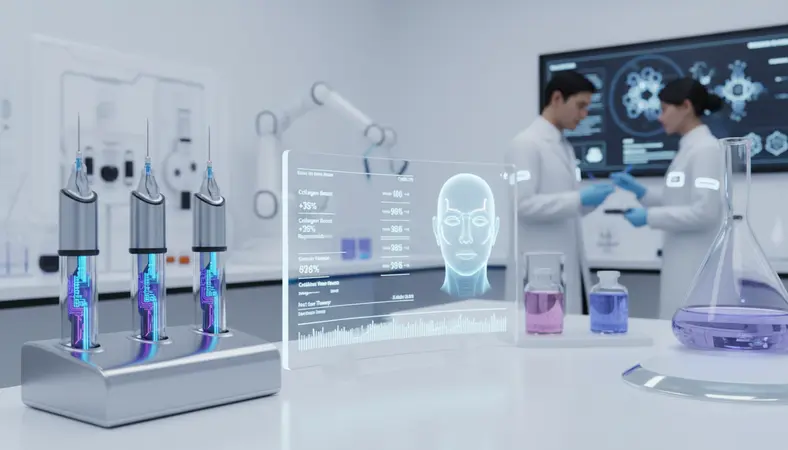
The global aesthetic medicine market enters 2025 riding a wave of sustained growth that shows no signs of cresting. Industry analysts project the market will exceed $18 billion in 2025, continuing a compound annual growth rate of approximately 10 to 12 percent that has persisted since the post-pandemic recovery. For practitioners, understanding the forces driving this growth is essential for strategic practice planning, service development, and market positioning.
This forecast examines the key trends shaping the aesthetic medicine landscape in 2025: market size and growth drivers, shifting consumer demographics, technology and treatment innovations, the rise of regenerative medicine, the expanding male aesthetics segment, and what it all means for practitioners building or scaling aesthetic practices.
Market Size and Growth Projections
The global aesthetic medicine market was valued at approximately $15.4 billion in 2024 and is projected to reach $18.2 billion in 2025, according to multiple industry research firms. The United States remains the largest single market, accounting for roughly 40 percent of global aesthetic procedure revenue. Europe, led by Germany, the United Kingdom, and France, represents approximately 25 percent. The Asia-Pacific region, driven by South Korea, Japan, China, and increasingly India, is the fastest-growing geographic segment.
Within the U.S. market, minimally invasive procedures continue to vastly outnumber surgical procedures. Botulinum toxin injections remain the single most performed aesthetic procedure, with an estimated 9.5 million treatments in 2024. Dermal filler injections follow at approximately 4.5 million procedures. Together, neurotoxins and fillers account for the majority of non-surgical aesthetic revenue and represent the core service offering for most injectable practices.
The medical spa segment continues its explosive growth trajectory, with the number of medical spas in the United States exceeding 10,000 for the first time in 2024. This proliferation creates both opportunity and competitive pressure for practitioners. Markets that were underserved five years ago now have multiple competing medical spas, elevating the importance of clinical excellence, patient experience, and practice differentiation.
Key Growth Drivers
Several converging factors are fueling the aesthetic market's sustained growth.
Social media normalization. Platforms like Instagram and TikTok have fundamentally shifted public perception of aesthetic treatments from taboo to mainstream. Younger consumers discuss their Botox appointments as casually as their gym routines. This cultural shift has dramatically expanded the addressable market by reducing the stigma barrier that previously deterred millions of potential patients from seeking treatment.
Treatment accessibility. The proliferation of medical spas, aesthetic clinics, and practitioners offering injectable services has made treatments geographically accessible to a much larger population. Patients no longer need to travel to major metropolitan centers to access quality aesthetic care. Additionally, financing options and membership models have reduced the financial barriers to treatment, making regular aesthetic maintenance accessible to middle-income consumers.
Product innovation. The expanding product portfolio gives practitioners more tools to address diverse patient concerns. The introduction of longer-lasting neurotoxins, biocompatible filler formulations, biostimulatory agents, and combination treatment protocols means that more patients can achieve their desired outcomes through minimally invasive approaches, reducing the need for surgical intervention.
Preventive treatment adoption. The "prejuvenation" movement, in which younger patients seek preventive aesthetic treatments before visible signs of aging appear, has created an entirely new patient cohort. Millennials and Gen Z patients are beginning Botox treatments in their late twenties and early thirties, establishing maintenance routines that will generate recurring revenue for decades.
Shifting Consumer Demographics
The demographic profile of the aesthetic patient is broadening in every dimension: age, gender, ethnicity, and socioeconomic status. Understanding these shifts is critical for practice marketing, service development, and clinical training.
Age expansion. The traditional aesthetic patient demographic was women aged 40 to 60. Today, the patient base spans from 25 to 75+. Younger patients seek preventive treatments and subtle enhancements. Older patients increasingly pursue non-surgical rejuvenation as alternatives to facelift surgery. Each age cohort has distinct treatment goals, communication preferences, and purchasing behaviors that practitioners must understand and accommodate.
Ethnic diversity. The aesthetic patient population increasingly reflects the ethnic diversity of the broader population. Practitioners must be proficient in treating all skin types, understanding the different aging patterns across ethnicities, and recognizing the culturally specific aesthetic preferences that influence treatment goals. Training programs that focus exclusively on Caucasian skin types and Western beauty standards are increasingly inadequate for clinical practice.
Income diversification. Aesthetic treatments are no longer exclusively for high-income consumers. Flexible payment plans, membership-based pricing models, and the availability of more affordable treatment options have made aesthetic services accessible to a broader income spectrum. Practices that offer tiered service levels and transparent pricing attract a wider patient base without diluting their premium offerings.
Technology Trends Reshaping Treatment
Technological innovation continues to expand the aesthetic treatment toolkit in ways that create new revenue opportunities for trained practitioners.
Energy-based devices. Radiofrequency microneedling (devices like Morpheus8, Potenza, and Secret RF) has become one of the fastest-growing treatment categories, combining the collagen-stimulating benefits of microneedling with the tissue-tightening effects of radiofrequency energy. These devices bridge the gap between injectable treatments and surgical intervention, offering meaningful skin tightening and texture improvement without the downtime or risk of surgery.
Artificial intelligence in aesthetics. AI-powered facial analysis tools are emerging that can objectively assess facial symmetry, volume distribution, and aging patterns, then generate treatment recommendations based on the analysis. While these tools are still early in their development, they have the potential to enhance consultation accuracy, improve treatment planning, and help patients visualize potential outcomes before committing to treatment.
Point-of-care diagnostics. Advanced skin analysis devices that measure hydration, elasticity, pigmentation, and sebum production in real time are becoming more affordable and clinically useful. These devices provide objective data that supports treatment recommendations and enables practitioners to track treatment progress with quantifiable metrics rather than subjective assessment alone.
The Rise of Regenerative Aesthetics
Perhaps the most significant paradigm shift in aesthetic medicine is the growing movement from replacement to regeneration. Traditional aesthetics focused on replacing lost volume with fillers and relaxing muscles with neurotoxins. Regenerative aesthetics aims to stimulate the body's own biological processes to restore youthful tissue quality from the inside out.
Biostimulators represent the most established segment of regenerative aesthetics. Products like poly-L-lactic acid (Sculptra) and calcium hydroxylapatite (Radiesse) have been used for years to stimulate endogenous collagen production. However, their application is evolving. Hyperdilute Radiesse and Sculptra protocols, which use lower concentrations spread over larger treatment areas, are being used for skin quality improvement rather than targeted volume replacement. These treatments improve skin texture, firmness, and overall quality by stimulating diffuse collagen production throughout the treated area.
Platelet-rich plasma (PRP) and platelet-rich fibrin (PRF) treatments continue to gain mainstream acceptance. These autologous treatments, derived from the patient's own blood, deliver concentrated growth factors that promote tissue repair, collagen synthesis, and angiogenesis. Applications include skin rejuvenation (the "vampire facial"), hair restoration, under-eye treatment, and as adjunctive therapy to enhance the results of microneedling and laser treatments.
Exosome therapy is the newest frontier in regenerative aesthetics. Exosomes are extracellular vesicles containing growth factors, cytokines, and genetic material that mediate intercellular communication. Topically applied or injected exosomes derived from stem cell cultures are being investigated for skin rejuvenation, wound healing, and hair restoration. While the science is promising, practitioners should approach exosome therapy cautiously, as the regulatory status remains unclear and product quality varies significantly between manufacturers.
The Male Aesthetics Boom
Male patients represent the fastest-growing demographic segment in aesthetic medicine, with procedure volumes among men increasing approximately 30 percent over the past five years. Industry analysts project that male patients will account for 15 to 20 percent of all non-surgical aesthetic procedures by the end of 2025, up from an estimated 10 to 12 percent in 2020.
The most popular procedures among men include neurotoxin injections for the upper face and masseter reduction, jawline contouring with dermal fillers, and body contouring treatments. Male patients typically seek subtle, natural-looking results that enhance their appearance without announcing that they have had treatment. This preference for subtlety requires specific training in male facial anatomy, masculine aesthetic goals, and dosing adjustments for larger male facial musculature.
Marketing to male patients requires a different approach than traditional aesthetic marketing. Men respond to messaging that emphasizes confidence, competitiveness, and professional advantage rather than beauty or youthfulness. Practice environments that feel clinical and professional rather than spa-like tend to resonate better with male patients. Practices that successfully capture the male aesthetic market report that these patients are often loyal, refer frequently, and are less price-sensitive than the average female aesthetic patient.
What This Means for Practitioners
The 2025 market landscape presents enormous opportunity for practitioners who position themselves correctly. The market is growing, the patient demographic is broadening, and new technologies and treatments are creating revenue opportunities that did not exist even two years ago. However, the increasing competition from the proliferation of aesthetic practices means that success will increasingly belong to practitioners who differentiate themselves through clinical excellence, comprehensive training, and exceptional patient experience.
Investing in advanced training is no longer optional for practitioners who want to remain competitive. Patients are becoming more educated and more discerning. They research their providers, compare credentials, and increasingly select practitioners based on demonstrated expertise rather than proximity or price alone. Comprehensive training from programs like advanced injectable training and PDO thread lift certification provides the clinical credibility that attracts and retains the most valuable patients.
Diversifying your service menu is equally important. Practices that rely exclusively on Botox and basic filler injections will find their revenue growth constrained as competition increases in these core services. Adding premium services like thread lifts, biostimulatory treatments, and regenerative therapies creates additional revenue streams, increases revenue per patient, and differentiates your practice from competitors who offer only the basics.
The aesthetic medicine market in 2025 rewards practitioners who combine clinical skill with business acumen, who invest in continuous education, and who adapt their practices to serve an evolving patient population. The opportunity has never been greater, and the time to prepare is now. Explore our membership plans to access the training, community, and resources you need to thrive in this dynamic market.