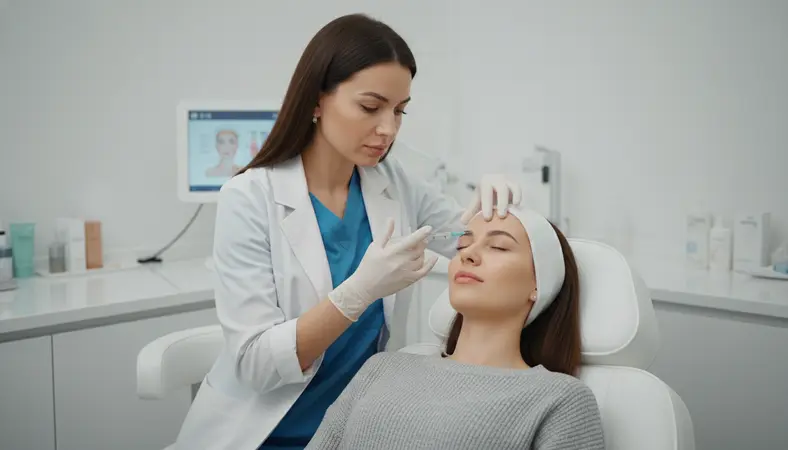
Botox is the most widely performed minimally invasive cosmetic procedure in the world. More than 9 million botulinum toxin treatments are administered annually in the United States alone, making it as routine as a dental cleaning for millions of patients. Yet despite its decades-long safety track record and extensive clinical research, Botox remains surrounded by myths and misconceptions that deter potential patients from seeking treatment and create confusion about what the product actually does.
Whether you are a patient researching Botox for the first time or a practitioner fielding questions from curious clients, understanding the truth behind these common myths is essential. Let us examine the five most persistent Botox myths and the clinical evidence that debunks each one.
Myth 1: Botox Is a Dangerous Toxin That Poisons Your Body
This is perhaps the most widespread misconception about Botox, and it stems from a fundamental misunderstanding of dose and pharmacology. Yes, botulinum toxin is produced by the bacterium Clostridium botulinum, and yes, in large quantities it can be extremely dangerous. However, the dose used in cosmetic Botox injections is extraordinarily small, typically 20 to 60 units per treatment session, which represents a tiny fraction of the amount that would be needed to cause any systemic toxicity.
To put this in perspective, the estimated lethal dose of botulinum toxin for a human is approximately 2,500 to 3,000 units when injected. A typical cosmetic Botox treatment uses between 20 and 60 units, roughly 1 to 2 percent of the amount that could theoretically cause serious harm. The toxin acts locally at the injection site, temporarily blocking the release of acetylcholine at the neuromuscular junction. It does not travel through the bloodstream, does not cross the blood-brain barrier, and does not accumulate in the body with repeated treatments.
Botox has been approved by the FDA since 2002 for cosmetic use and since 1989 for therapeutic applications. It has one of the longest and most extensively studied safety profiles of any cosmetic product on the market. Serious adverse events from cosmetic Botox are exceedingly rare when the product is administered by trained practitioners at appropriate doses. The safety record over three decades and millions of treatments speaks for itself.
7.4 million
Botulinum toxin procedures performed in the US in 2023. Botox has maintained its position as the #1 minimally invasive cosmetic procedure for over 20 consecutive years.
Source: ASPS 2023 Statistics Report
Myth 2: Botox Will Make You Look Frozen and Expressionless
The "frozen face" myth is rooted in early aesthetic practices when dosing guidelines were less refined and the goal of treatment was often complete muscle paralysis. In the early years of cosmetic Botox, some practitioners administered high doses that eliminated all muscle movement in the treated areas, producing the stiff, expressionless appearance that became a cultural punchline.
Modern aesthetic medicine has moved far beyond this approach. Today's skilled injectors use conservative dosing techniques that reduce muscle activity enough to smooth wrinkles while preserving natural facial expression. The goal is not paralysis but rather a subtle softening that makes patients look refreshed and rested without looking "done." A well-trained injector can selectively weaken overactive muscles while leaving surrounding muscles fully functional, maintaining the natural animation that makes a face look alive and engaging.
The frozen look almost always results from one of two factors: excessive dosing or incorrect placement. Both are technique-dependent issues, not inherent properties of the product. When Botox is administered at appropriate doses in anatomically correct locations by a properly trained injector, patients retain full emotional expressiveness while enjoying significantly smoother skin. The difference between a natural result and a frozen result is the skill of the practitioner, not the product itself.
Myth 3: Botox Is Only for Cosmetic Vanity
While cosmetic wrinkle reduction is the most well-known application, Botox has a long and growing list of FDA-approved therapeutic uses that have nothing to do with aesthetics. Reducing Botox to a cosmetic vanity product ignores its profound impact on the quality of life for millions of patients suffering from legitimate medical conditions.
Botox is FDA-approved for the treatment of chronic migraine headaches, a debilitating condition affecting approximately 39 million Americans. For patients who experience 15 or more headache days per month, Botox injections every 12 weeks can reduce the frequency and severity of migraines significantly. Clinical trials showed that chronic migraine patients treated with Botox experienced an average of 8 to 9 fewer headache days per month compared to baseline.
Other FDA-approved therapeutic applications include overactive bladder, cervical dystonia (involuntary neck muscle contractions), upper limb spasticity, excessive sweating (hyperhidrosis), strabismus (crossed eyes), and blepharospasm (involuntary eyelid twitching). Dentists are increasingly using Botox for TMJ disorders, bruxism, and myofascial pain, applications that can dramatically improve patients' daily comfort and function.
The therapeutic applications of Botox continue to expand as researchers discover new uses. Current research is investigating Botox for depression, premature ejaculation, neuropathic pain, and even wound healing. Far from being a superficial cosmetic product, botulinum toxin is one of the most versatile therapeutic agents in modern medicine.
Myth 4: Botox Is Addictive
Botox contains no addictive substances. It does not trigger dopamine release, does not create chemical dependency, and does not produce withdrawal symptoms when discontinued. From a pharmacological standpoint, there is zero mechanism by which botulinum toxin could create physical addiction. This myth confuses the desire to maintain results with clinical addiction, and the distinction is important.
When Botox wears off after three to four months, the treated muscles gradually return to their pre-treatment activity level, and wrinkles reappear as they were before treatment. The face does not look worse than it did before Botox. It simply returns to its natural state. There is no rebound effect, no worsening of wrinkles from discontinuation, and no physical need to continue treatment.
What patients experience is a preference for their appearance with Botox over their appearance without it. This is no different from preferring a good haircut over an overgrown one or clean teeth over unstained ones. The desire to maintain an aesthetic improvement is a rational preference, not an addiction. Patients can stop Botox at any time without any physical consequence whatsoever. Some patients choose to take breaks from treatment, others adjust their frequency, and still others decide it is no longer worth the investment. All of these are perfectly reasonable decisions that patients can make freely because there is no dependency involved.
Myth 5: Anyone Can Inject Botox, Training Does Not Matter
This is perhaps the most dangerous myth on this list. The perception that Botox injection is simple enough for anyone to perform has led to a disturbing trend of unqualified individuals offering cut-rate injections in non-medical settings including hotel rooms, private residences, and unlicensed "Botox parties." The consequences of unskilled injection can range from disappointing results to serious medical complications.
Safe, effective Botox injection requires comprehensive knowledge of facial anatomy, including the location and depth of muscles, the course of motor nerves, and the position of blood vessels. It requires understanding of pharmacology, including how different dilutions affect spread, how dose relates to effect duration, and how drug interactions can alter outcomes. It requires clinical assessment skills to evaluate each patient's unique anatomy, identify contraindications, and develop individualized treatment plans.
Complications from improper Botox injection include ptosis (drooping eyelid), brow heaviness, asymmetry, difficulty swallowing when injecting neck muscles, and unsatisfactory aesthetic outcomes that cannot be reversed. While these complications are temporary because Botox effects wear off, they can persist for three to four months and cause significant distress to the patient.
Patients should always verify that their injector is a licensed medical professional, ideally a physician, nurse practitioner, physician assistant, or dentist, who has completed accredited Botox training with hands-on clinical practice. For practitioners, investing in comprehensive training is not just about clinical competence; it is about patient safety and professional liability protection.
The Bottom Line: Evidence Over Assumptions
Botox has been studied in over 500 peer-reviewed publications and has been administered safely to tens of millions of patients worldwide over more than three decades. The myths surrounding it persist largely because of sensationalized media coverage and the natural human tendency to fear what is not fully understood.
For patients, the takeaway is simple: Botox is safe, effective, non-addictive, and medically versatile when administered by a qualified practitioner. Do your research, choose your provider carefully, and ask questions during your consultation. A knowledgeable injector will welcome your questions and provide clear, evidence-based answers.
For practitioners, understanding and addressing these myths is a core component of effective patient communication. Patients who walk into your office carrying these misconceptions need education, not dismissal. Taking the time to explain the science behind Botox builds trust, sets realistic expectations, and creates the foundation for a long-term patient-provider relationship.
Frequently Asked Questions
Is Botox safe for long-term use?
Yes. Botox has been used clinically since 1989 and cosmetically since 2002 with an excellent long-term safety profile. Studies following patients who have received regular treatments for 10 or more years show no cumulative adverse effects. The product is metabolized and eliminated by the body within a few months of each treatment.
At what age should you start getting Botox?
There is no single correct age to start Botox. Many practitioners recommend considering treatment when dynamic wrinkles (lines that appear with muscle movement) begin to persist at rest. For some patients, this occurs in their late twenties; for others, it may not happen until their forties. A consultation with a qualified injector can help determine the right timing for your individual needs.
Will my wrinkles get worse if I stop Botox?
No. When you stop Botox, your muscles gradually return to their normal activity level and your skin returns to its pre-treatment appearance. There is no rebound effect that makes wrinkles worse than they would have been without treatment. In fact, long-term Botox users often find their wrinkles are less pronounced even after stopping because the muscles have been partially inactive, reducing the repetitive folding that deepens lines over time.
How do I find a qualified Botox injector?
Look for a licensed medical professional (physician, nurse practitioner, physician assistant, or dentist) who has completed accredited injectable training with hands-on clinical practice. Ask about their training credentials, how many treatments they perform regularly, and request before-and-after photos of their work. A qualified injector will conduct a thorough consultation before treatment and should never pressure you into procedures.
Can Botox be used for medical conditions?
Absolutely. Botox has numerous FDA-approved medical uses including chronic migraines, overactive bladder, cervical dystonia, upper limb spasticity, excessive sweating (hyperhidrosis), and more. Many of these therapeutic applications are covered by insurance when medical necessity criteria are met.